Repairs That Extend Beyond Your Property Line
Street Openings in Willingboro for sewer line collapses and water main breaks that originate under public roadways
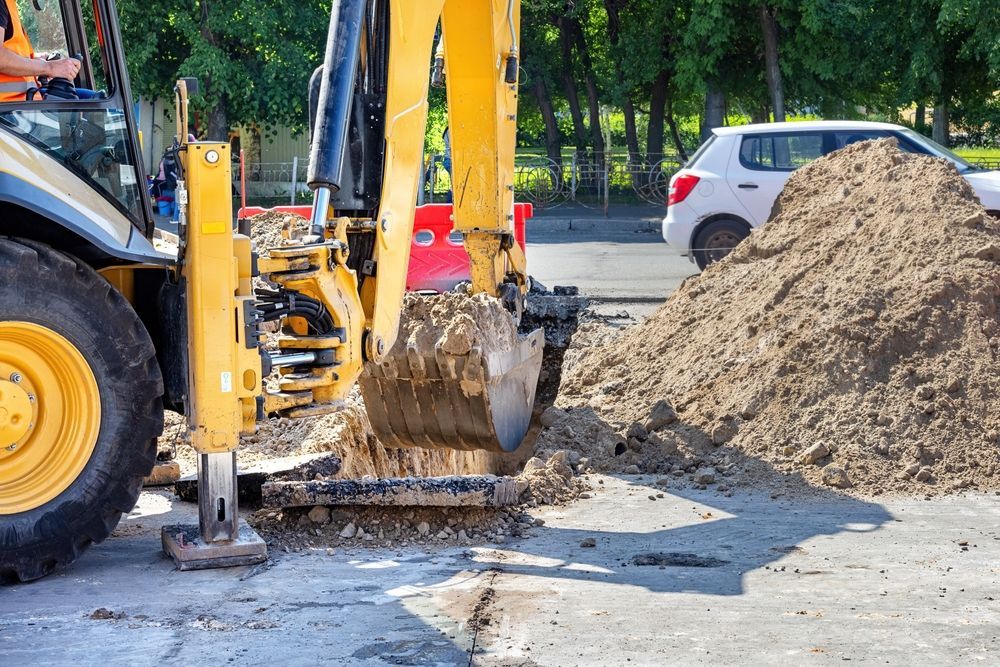
When a backup originates beyond your yard or water surfaces at the curb line, JFK Plumbing Heating & Drain Cleaning Inc. handles street opening excavation and main line reconstruction that crosses under municipal roads. This work requires excavators, trench shoring, performance bonds, and multi-agency permits that most property owners never anticipate until a sinkhole forms in the driveway or raw sewage surfaces in the street. You see heavy machinery cutting through asphalt because the lateral connection running from the city trunk line to your home has collapsed underground, and the township will not repair infrastructure it does not own.
The project begins with camera diagnostics to pinpoint the failure location, followed by simultaneous permit applications to the local Department of Public Works for road cut authorization and to the construction official for UCC plumbing subcode compliance. Before any excavation starts, 811 utility mark-outs identify gas, electric, and fiber optic lines that cross the work zone, and traffic control barricades with police details protect both the crew and passing vehicles during lane closures.
Schedule a diagnostic camera inspection to determine whether the failure point sits under your yard or extends into the municipal right-of-way.
Why Municipal Governments Do Not Cover This Work
Most property owners assume the township maintains all pipes under public roads, but New Jersey municipalities operate on a "tree and branch" ownership model. The township owns and maintains the main trunk line running down the center of the street, while the lateral branch extending from that trunk to your home belongs entirely to you, even when it runs forty feet under asphalt and county right-of-way. When that branch cracks or collapses, municipal crews will not excavate or fund repairs, leaving the homeowner legally and financially responsible for full restoration.
JFK Plumbing Heating & Drain Cleaning Inc. manages the entire workflow from permit negotiation through final road paving, so you avoid the confusion of coordinating separate contractors for excavation, plumbing, and asphalt restoration. Once excavation reaches the main connection and the new line is installed, trenches receive flowable fill backfill engineered to prevent future road settling, followed by temporary cold patch and permanent hot asphalt paving that meets DPW inspection standards. You notice smooth road surfaces without depressions and a fully functional water or sewer system without recurring backups.
Projects of this scale typically start at fifteen thousand dollars due to heavy machinery deployment, dual-layer permitting, and mandatory road restoration specifications that exceed standard yard excavation. Factors affecting final cost include trench depth, distance from the curb to the main tap, soil conditions requiring additional shoring, and whether asphalt restoration requires milling and paving adjacent sections to match existing road grades.
Questions about scope or timeline before you decide? Call (609) 239-9557 — we are happy to walk through what the job would look like on your specific property before you commit to anything.
Questions Property Owners Ask Before Street Opening Work
Street openings involve coordination rarely required in standard plumbing repairs, so homeowners frequently ask about permitting timelines, traffic disruptions, and long-term pavement integrity before excavation begins.
What permits are required for excavation under municipal roads?
Two separate permit tracks run simultaneously: a road opening permit issued by the township or county Department of Public Works that includes performance bond requirements and restoration specifications, and a UCC plumbing subcode permit filed with the local construction office that governs underground pipe installation and requires inspection sign-offs before backfill proceeds.
How long does the permitting and excavation process take?
Permit approval timelines vary by municipality but typically range from one to three weeks depending on application backlogs and whether additional engineering reviews are required. Once permits are issued, excavation and pipe replacement often complete within two to four days, though final asphalt paving may occur weeks later depending on weather and inspector availability.
Will the repaired road section settle or crack after backfill?
Proper trench backfill uses flowable fill or dense-graded aggregate compacted in lifts to match the load-bearing capacity of undisturbed roadbed, preventing future subsidence. Willingboro and surrounding Burlington County townships mandate these materials in road opening permits specifically to avoid the depression failures that occur when contractors use loose soil backfill.
Who coordinates traffic control and utility mark-outs during the project?
The contractor handles 811 utility locating requests, arranges police details for lane closures, and deploys road safety barricades that meet Manual on Uniform Traffic Control Devices standards. You do not coordinate separately with utility companies or law enforcement.
Can I finance a street opening project instead of paying the full amount upfront?
Flexible financing options allow you to convert large emergency repair costs into fixed monthly payments, removing the immediate financial shock of a fifteen-thousand-dollar invoice. Pre-qualification takes sixty seconds with no impact on your credit score, and approved funds disburse directly to your bank within one to two business days.
JFK Plumbing Heating & Drain Cleaning Inc. provides turnkey street opening services that include diagnostic locating, permit acquisition, heavy excavation, code-compliant pipe installation, and final road restoration. If you observe sinkholes forming near the curb or water surfacing in the street, request an immediate camera inspection to determine the failure location and begin permit filing.